
Longer school schedules boost work opportunities for mothers

An increase of over a third in the time that children in Chile spend in primary school each day has had a big positive effect on the quality of mothers’ jobs. What’s more, the labour market benefits of the full-day schooling policy have been disproportionately higher for women with relatively lower levels of education. These […]


Passing on wealth to loved ones in later life

People who expect to die in the near future transfer an average of 8-12% of their financial wealth to their loved ones. What’s more, such transfers take place not only among the richest households in society, but also in middle-class families. These are the central findings of a new study of estate planning and inter-vivos […]

Gender diversity in political responses to the pandemic

New research uncovers a significant link between women in political leadership roles and school closure policies during the Covid-19 crisis. The study by economists Natalia Danzer, Sebastian Garcia-Torres, Max Steinhardt and Luca Stella finds that higher female representation in national governments in Europe during the pandemic was associated with a lower likelihood of schools being […]

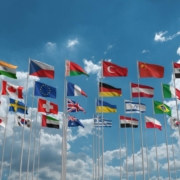
The value of coalitions

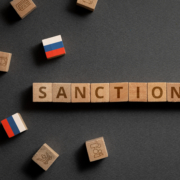
New research shows how countries acting together when imposing sanctions can increase the effectiveness of the measures in terms of raising the economic costs for the target countries and increasing the potential for deterrence. The study by Sonali Chowdhry, Julian Hinz, Katrin Kamin and Joschka Wanner, which examines the role of coalitions in the context […]

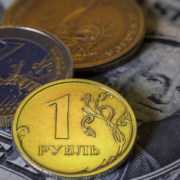
Effects of sanctions on the target’s exchange rate

Exchange rate movements are not an appropriate metric of the success or failure of sanctions, but a reflection of the type and scale of the measures taken. That is one of the findings of new research by Barry Eichengreen, Massimo Ferrari Minesso, Arnaud Mehl, Isabel Vansteenkiste and Roger Vicquéry, which highlights the channels through which […]

Trade liberalisation boosts both economic activity and political violence

While agricultural trade liberalisation raises economic activity, it also triggers distributional conflict and increases political violence in emerging countries, according to new research by Francesco Amodio, Leonardo Baccini, Giorgio Chiovelli and Michele Di Maio. But political violence does not increase everywhere: the effects are larger in urban areas, in areas where production requires relatively few […]

Big economic impact of border changes on nearby regions

New evidence on the contrasting economic experiences of regions within Russia following the annexation of Crimea in 2014 confirms the idea that the removal or weakening of borders improves the outcomes of nearby regions, while the creation or closing of borders worsens them. The study by Kristian Behrens shows that regions in the north of […]

Effects of trade sanctions against Russia

While the costs to the European Union (EU) as a whole of a variety of trade sanctions on Russia are small, there are big asymmetries. In particular, small European countries that were satellite economies of the Soviet Union suffer enormously more than large West European economies, sometimes by several orders of magnitude. That is the […]

Power mismatches

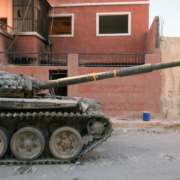
Power mismatches increase the probability of ethnic conflicts, with groups that possess more military power than political power being particularly susceptible to participating in such conflicts. That is the central conclusion of new research by Massimo Morelli, Laura Ogliari and Long Hong. Their study finds that mismatched groups are more likely to take part in […]

Power-sharing agreements

Agreements made between former enemies in civil conflicts to share political power in the same government can have a significant impact in reducing the likelihood and intensity of violence. That is the central finding of new research by Hannes Mueller and Christopher Rauh. Comprehensive power-sharing agreements – which cover substantive issues made between parties that […]